Lab
I build the tools I work with.
The projects here share one idea: automate agency routine so there is time for the one thing the client actually sees – the deliverable.
Not a showcase portfolio. These systems run daily in real agency operations, from first concept through architecture to production. The Lab documents tools and workflows; open panel research, methods and data boundaries live separately under Research.
In-house · TypeScript · MCP · Cloudflare Workers · OAuth
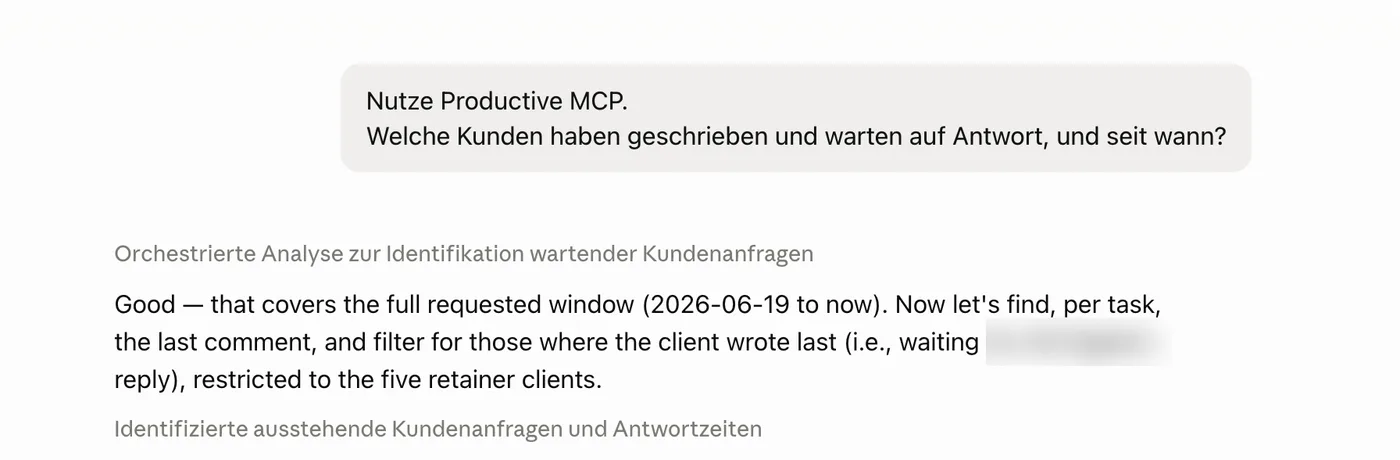
MCP connector for Productive.io
The connector makes this data queryable via MCP directly in Claude: one plain-language question instead of a click path through reports. No plan upgrade, self-hosted, read-only.
$230 · avoided upgrade cost for 10 seats · as of August 2026
In-house · Productive API · Snapshots
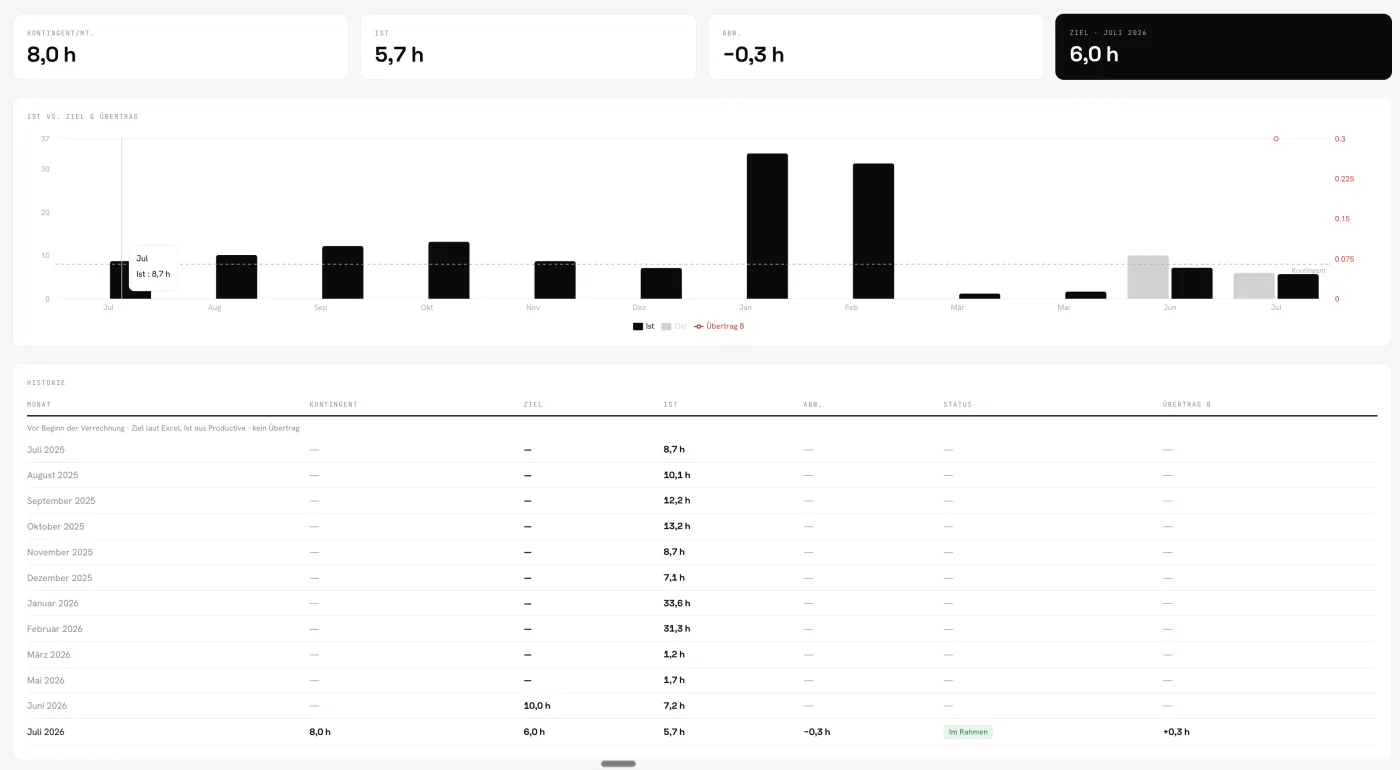
Workload board for the monthly close
Before, that meant pulling data from Productive by hand and checking it against the client budget spreadsheet. Now every client card carries one big number – live from Productive, frozen as a snapshot after the monthly close.
59 clients · 10 team members · as of August 2026
Open source · CC BY 4.0 · SKILL.md · Claude · ChatGPT
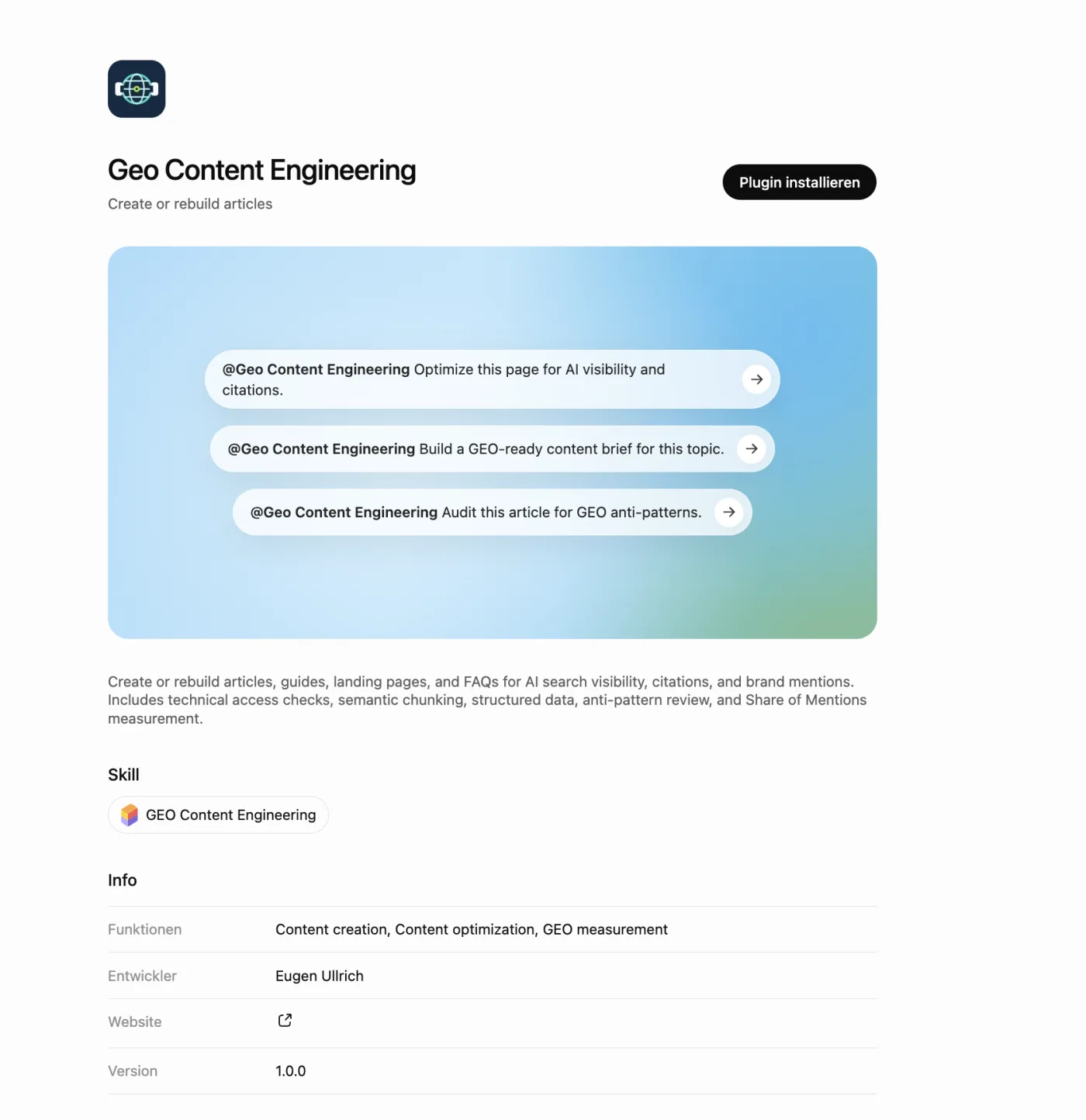
GEO content engineering: the method as an agent skill
It walks the agent through the retrieval mechanic of answer engines – chunk, embed, retrieve, ground, cite – and applies it as a repeatable workflow. Two modes: create new content, or rebuild existing pages, baseline first.
Claude / ChatGPT · Agent Skill · CC BY 4.0
Open source · CC BY 4.0 · n8n · OpenRouter · Google Sheets
GEO Share of Voice monitor as an n8n workflow
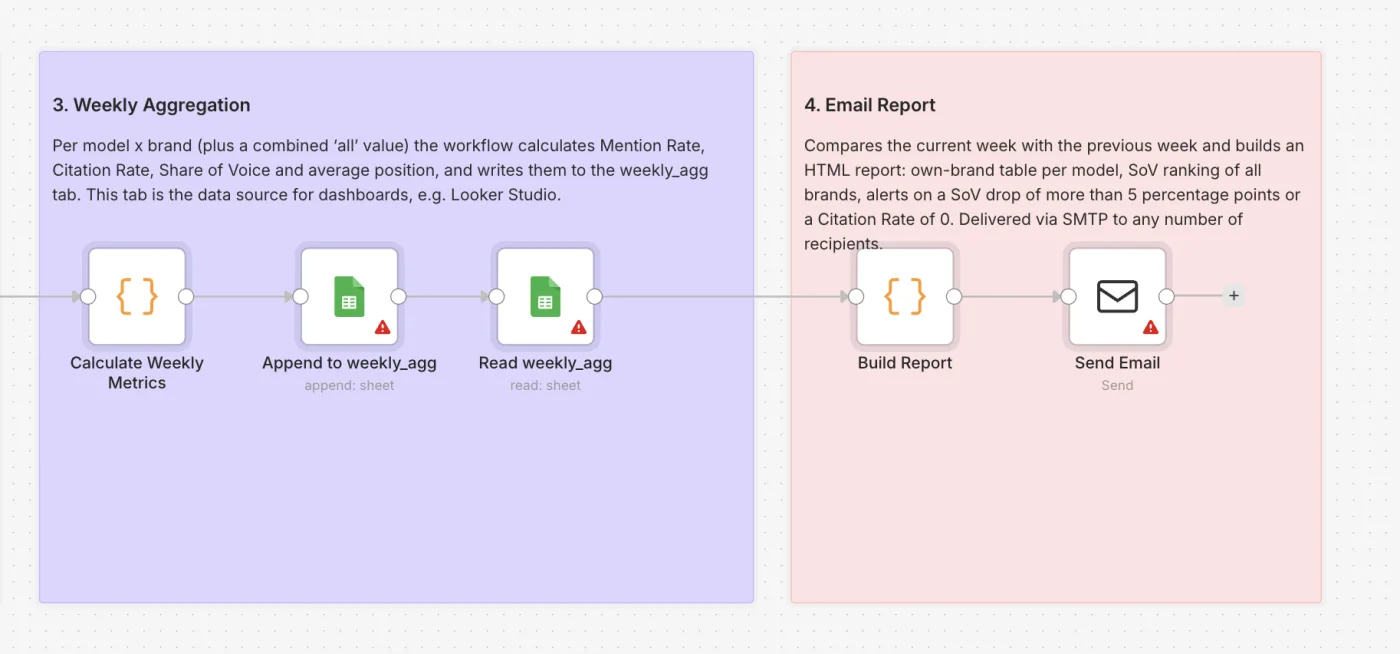
Every question runs three times per model to reduce the random variation of individual answers. Regex detection remains reproducible for the same input. Raw data in Google Sheets, a weekly email report, a diagnostic alert when citation rate hits zero and a dated cost comparison against Peec.ai.
$30–35 · per month · three repetitions weekly · July 2026 prices
Open source · CC BY 4.0 · n8n · OpenRouter · Google Sheets
FAQ Factory: drafts from foreign page text, without trusting it
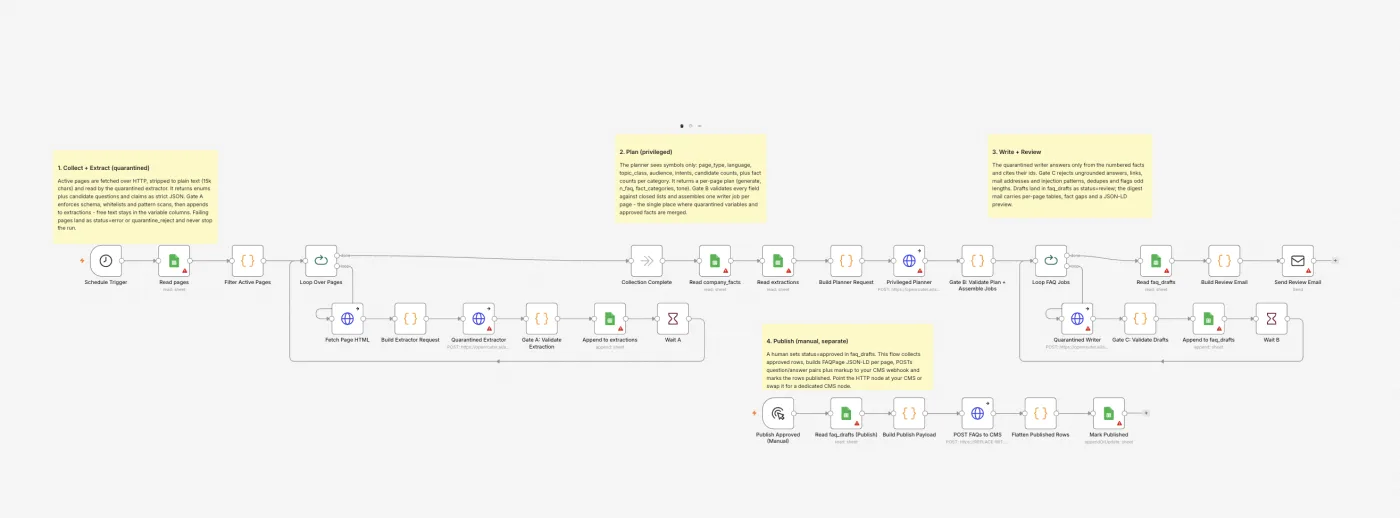
The workflow separates the two along Simon Willison's dual LLM pattern: the model in control works strictly on enums, counters and IDs and never sees page text; the model that reads page text receives zero company data. Three code gates check without a model, every answer has to cite fact IDs – and nothing publishes itself.
$0.0035 · model calculation per page run · manual approval
Lab experiment · OKF v0.2 · Gemini 2.5 Flash · RAG
OKF tool: build your own Open Knowledge Format
OKF is a directory of Markdown files with YAML frontmatter whose concepts link into a graph. The tool reads your bundle, shows the Concept Library, the knowledge graph with its gaps, and a RAG chat instructed to use the uploaded bundle and display the source concepts it used.
Upload → Graph → Chat · OKF v0.2 · Lab experiment
OKFUPLOAD → GRAPH → CHAT
Open source · GPLv2 or later · WordPress · PHP · REST API
Entity Link Engine for WordPress
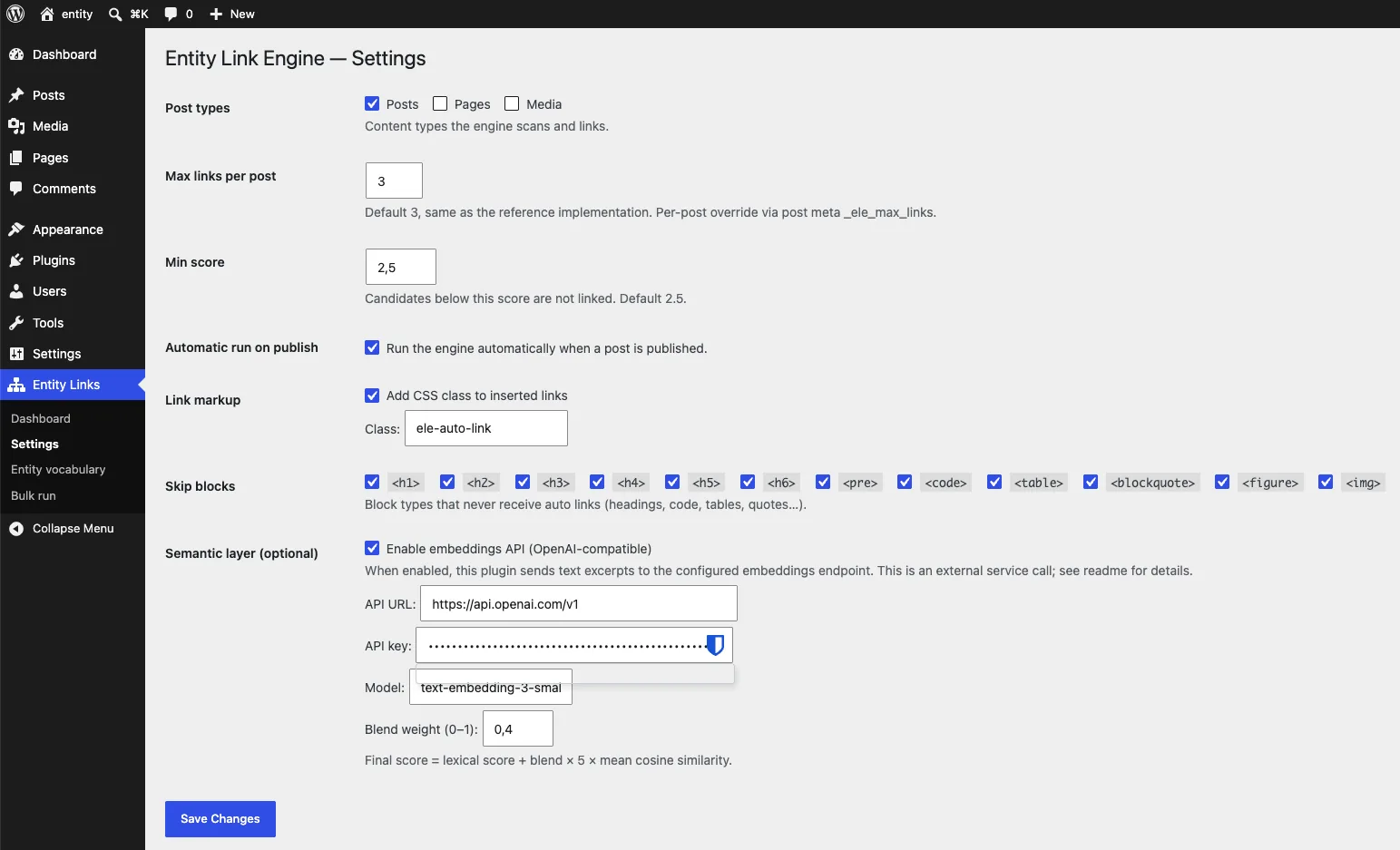
The engine skips headings, code and tables, adds at most one automatic link per paragraph and leaves editorial links untouched. A preview comes before insertion; afterwards, undo restores the exact previous content.
57/57 tests · local test run on 18 August 2026